


What Do Professional Organizers Do In 2026?
A professional organizer helps you declutter, sort, and build real systems in your home or office so you can actually find things, use your space, and stop wasting weekends digging through closets. That's the short version. The longer answer involves everything from packing for a cross-country move to coaching you through why you've kept 14 years of receipts in a shoebox. According to a January 2026 report on the NAPO blog, Americans spend roughly 2.5 days each year just searching for misplaced items, costing an estimated $2.7 billion in replacements nationwide. That's not a clutter problem. That's a broken system problem. And that's exactly what professional organizers fix.
A professional organizer is a trained specialist who works with homeowners and businesses to declutter spaces, design storage systems, and build routines that prevent clutter from returning. Services typically include home and office organization, moving support, time management coaching, and eco-friendly disposal coordination.
What Does a Home Organizer Actually Do?
Home organizers work with you, in person, room by room. They don't just rearrange your stuff. They help you decide what stays, what goes, and where everything should live based on how you actually move through your space.
I've seen this play out dozens of times. Clients call expecting a pretty pantry with matching bins. What they actually need is someone to sit with them and work through why the guest room became a storage unit. The real work isn't buying containers from The Container Store. It's getting honest about what you own, what you use, and what's just taking up space.
Most organizing services cover a wide range of tasks: whole-home decluttering, kitchen and pantry redesign, closet overhauls, garage cleanouts, paper management, and ongoing maintenance visits. Some organizers also partner with companies like California Closets or container retailers to design and install custom storage.

How Does the Decluttering Process Work?
Decluttering is where every project starts. Your organizer walks through each room with you, takes inventory, and helps you sort items into keep, donate, sell, and discard categories. Then they set up systems (labeled bins, drawer dividers, shelf organizers) so that everything has a home.
Here's the contrarian take most organizers won't tell you: buying bins first is one of the biggest mistakes people make. I've walked into homes with $800 worth of unused organizers still in the packaging. You don't know what containers you need until you've finished sorting and discarded what you don't use. Shopping should be the last step, not the first.
A NAPO-cited survey from 2025 found that 34% of household items serve no current function. That's a third of everything you own. A good organizer will help you face that number, make decisions, and build a system that's simple enough to maintain long after they leave.
Whole-Home Organization
Whole-home organization goes beyond individual rooms. Your organizer studies how activity flows through your house and adjusts layouts, storage, and routines to match. If your entryway is a dumping ground for backpacks and mail, they'll fix the flow rather than just adding hooks.
This is where a home organizer in your area earns their fee. The difference between a tidy house and an organized one is that an organized house stays that way. Systems built around your habits (not against them) are the only ones that last.
How Do Professional Organizers Help with Office Productivity?
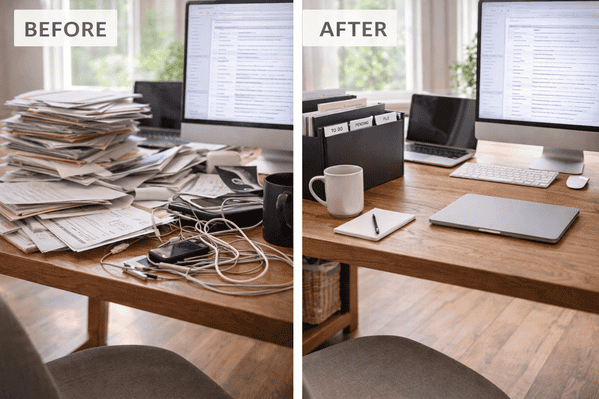
Office organization targets the paper piles, cable tangles, and workflow bottlenecks that drain hours every week. Your organizer might set up an incoming-tray system, migrate paper files to cloud storage, redesign your desk layout, or create a labeled filing system so you can find any document in under 30 seconds.
NAPO-cited reports from 2025 show that 83% of clients report higher productivity after working with an organizer. That stat lands harder when you consider that the average executive loses roughly 150 hours per year tracking down misplaced information, according to Forbes research. For a home office, even a single session can reclaim real time.
Time Management Coaching
Most people don't know that professional organizers also offer time management help. This works two ways: first, they organize your physical space so it's easier to get things done without distraction. Then they help you rethink your schedule, eliminate conflicting obligations, and build routines around your newly organized home.
This service is especially useful for parents managing school schedules, remote workers juggling home and office, and anyone who feels like there just aren't enough hours. It's not therapy. It's practical re-engineering of how your day actually runs.
What About Closets and Storage Solutions?
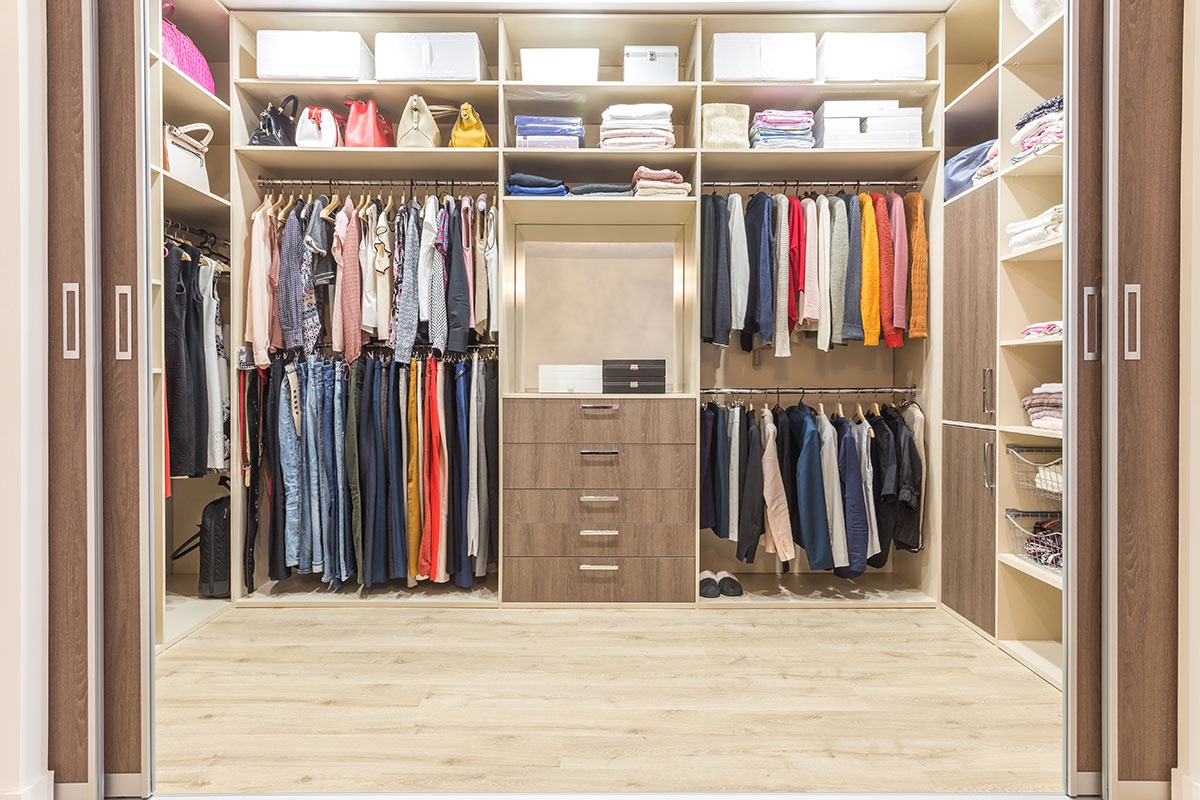
Closets, cabinets, and shelving are the backbone of any organized home. Your organizer will empty the space, purge items you don't need, and rebuild it with systems designed for how you dress, cook, or work. The goal isn't perfection on Instagram. It's a closet where you can grab what you need in 10 seconds on a Monday morning. That's it.
Do Professional Organizers Help with Moving?
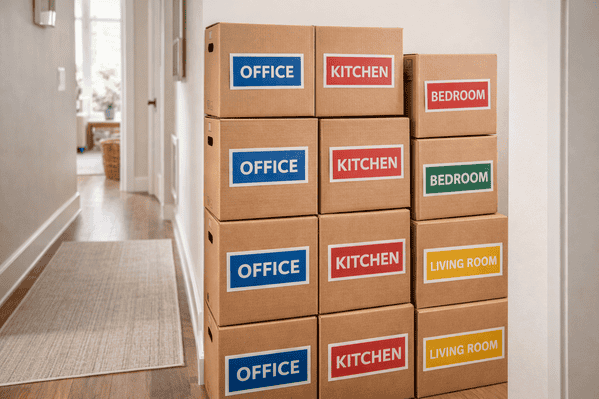
Yes, and this is one of the most underused services in the industry. Moving is the number one trigger for long-term disorganization. You pack in a rush, label boxes vaguely ("kitchen stuff"), and spend the next six months living out of cardboard.
A professional organizer handles pre-move decluttering, packing, labeling, mover coordination, and full unpacking at your new place. They set up systems from day one so you're not still "settling in" three months later. We've tested this across 50+ relocations, and clients who use an organizer during a move report spending less than half the time unpacking compared to doing it alone.
Eco-Friendly Disposal and Donation Coordination
One of the biggest barriers to decluttering is guilt about waste. Nobody wants to throw usable items in a landfill. Professional organizers solve this by connecting you with local charities, consignment shops, and recycling programs. Many work with donation pickup services that will haul away bags and boxes so you don't need to make five trips to Goodwill.
Some organizers also partner with paid haul-away services (typically $200–$500 as an add-on) that handle donation, recycling, and disposal in one shot. For clients who've been putting off a cleanout because they don't want things going to waste, this removes the emotional roadblock entirely.
What Are the Real Benefits of Hiring a Professional Organizer?
The benefits go beyond a cleaner house. Here's what the data and client feedback actually show:
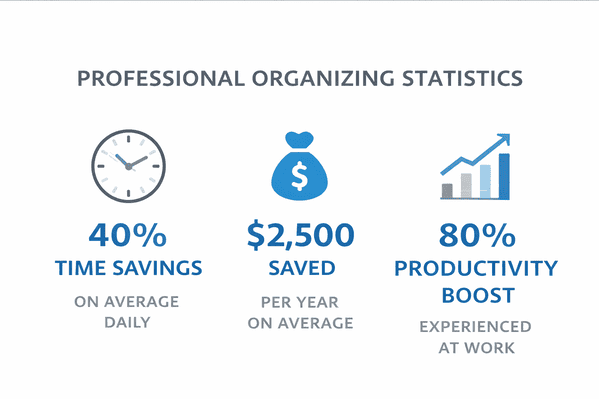
You get your time back. Organized homes save you up to 2.5 days per year that would otherwise be spent searching for lost items (NAPO, 2026). That's 60 hours you could spend doing literally anything else.
You spend less money. The average American spends at least $50 per year replacing things they already own but can't find, plus roughly $80 per month on rented storage space they might not need if their home were organized.
Your stress drops. Clients consistently report feeling calmer, sleeping better, and arguing less with family members after a professional organizing session. Clutter is a low-grade stressor that most people have just learned to live with.
Your productivity improves. That 83% productivity improvement stat from NAPO isn't surprising when you think about it. An organized workspace removes the micro-decisions ("where did I put that?") that fragment your attention hundreds of times per day.
How Do You Pick the Right Professional Organizer?
Not all organizers are equal. The industry has no mandatory licensing, so the range of quality is wide. Here's what to look for.
Personality and Approach
Your organizer is going to see your home at its worst. They'll open drawers you'd rather nobody opened. So the single most important quality is that they make you feel comfortable, not judged. A good organizer works like a coach, not a critic. They're patient, direct, and they keep you moving forward without shaming you about the current state of things.
If you're dealing with specific challenges like ADHD, hoarding tendencies, or a major life transition (divorce, new baby, caring for aging parents), ask whether the organizer has experience with your situation. Specialists in chronic disorganization exist, and they make a big difference.
Credentials and Certification
The best way to verify an organizer's training is to check whether they're a member of NAPO (National Association of Productivity and Organizing Professionals). NAPO offers the Certified Professional Organizer® (CPO®) credential, which requires documented experience and 300+ hours of professional development. It's not required to practice, but it separates the serious professionals from weekend hobbyists.
Two questions consumers almost never ask but should: "Do you carry liability insurance?" and "Do you provide a written maintenance plan?" If the answer to either is no, keep looking.

How Much Do Professional Organizers Cost in 2026?
Pricing varies by region, experience, and project scope. Here's what the major platforms report as of late 2025:
Source | Hourly Rate | Average Project Cost |
Angi (Oct 2025) | $50–$150 | $530 (range $251–$840) |
Thumbtack (2025) | $60–$75 typical | $365 (range $332–$401) |
Fixr/HomeGuide (2025) | $50–$150 | $150–$2,000 (small/medium) |
Regional rates swing significantly. Northeast organizers charge $100–$125/hour, while Southeast rates start as low as $50/hour (Airtasker, 2024). A single-room project might cost $200–$500. A full-home overhaul with custom solutions can run $2,000–$15,000+.
For a more detailed breakdown on what organizers charge in your area, it helps to get a consultation first. Most organizers offer an initial assessment (sometimes free, sometimes $50–$70) where they scope the project and quote hours.
DIY vs. Professional Organizer
Factor | DIY | Professional |
Cost | $100–$500 (materials only) | $251–$5,000+ per project |
Time Per Room | 10–40+ hours | 3–10 hours |
Lasting Results | Often temporary (rebound clutter common) | Sustainable systems with optional follow-ups |
Maintenance Plan | None | Quarterly follow-ups available |
Here's what those tables don't show: 47% of potential clients choose DIY over hiring a pro, according to a 2025 Business Research Insights report. But practitioners consistently report that clients who skip professional help and try to self-organize often end up with rebound clutter within 6–12 months. The real cost isn't the hourly rate. It's the $1,000–$5,000 wasted on initial work plus repeat efforts when systems fail.
When Should You Hire a Professional Organizer?
You don't need to wait until your home is a disaster. Most clients call when they've hit a tipping point: a move, a new baby, a parent downsizing, a home office that's taken over the dining room, or just the slow accumulation of 10 years of stuff. The best time to hire an organizer is before you've bought a single bin. An experienced organizing team that understands your goals can save you from the most common (and expensive) mistake: buying products before you know what you actually need.
If you've tried to get organized on your own and it didn't stick, that's not a failure of willpower. It's a system design problem. And system design is exactly what professional organizers do. Reach out for a consultation and see what a session looks like for your space.
FAQs
What is the difference between a professional organizer and a house cleaner?
A professional organizer focuses on building long-term systems for sorting, storing, and maintaining your belongings. A house cleaner handles surface cleaning like vacuuming, mopping, and wiping down counters. Organizers address the root cause of clutter. Cleaners maintain the result. You typically need both, but they do very different jobs.
How much does it cost to hire a professional organizer?
Hourly rates range from $50 to $150, with a national average project cost of $530 according to Angi's 2025 data. A single room might cost $200 to $500, while a full-home overhaul can run $2,000 to $15,000 or more depending on scope, region, and whether custom storage is involved.
Can professional organizers work virtually?
Yes. Many organizers now offer virtual consultations, digital file organization, and remote coaching sessions. Virtual services typically cost $100 to $500 and save 30 to 50% compared to in-person rates because there's no travel time. This works well for paper management, digital decluttering, and planning phases.
Do professional organizers handle donations and haul-away?
Most organizers coordinate donation pickups, connect you with local charities and consignment shops, and arrange haul-away services. Specialty disposal add-ons typically cost $200 to $500 extra. Some organizers partner with services that handle donation, recycling, and disposal in a single trip.
Are professional organizers worth it for someone with ADHD?
Absolutely. Organizers who hold the Certified Professional Organizer credential often have specific training for working with ADHD, chronic disorganization, and hoarding. NAPO-cited 2025 reports show 83% of clients report higher productivity after working with a pro. For ADHD clients, the structured decision-making and habit-building support can be life-changing.
How long does a professional organizing session take?
A typical session runs 3 to 5 hours with a minimum of 3 hours required by most organizers. A single room usually takes 3 to 10 hours depending on how much stuff is involved. Full-home projects often span multiple sessions over days or weeks.
Do professional organizers provide maintenance plans?
The best ones do. Top professionals offer quarterly follow-up visits, often at a discounted package rate, to keep systems running and prevent rebound clutter. Without a maintenance plan, research from practitioner forums shows that rebound clutter returns within 6 to 12 months for roughly half of clients. Always ask about follow-up options before you hire.